How Cun Chao Reshaped Economy, Identity, and Power in Rural China

From Village Pitch to Social Engine
How Cun Chao Reshaped Economy, Identity, and Power in Rural China
By Andrew Song | Offside

When Cun Chao or the Chinese Village Super League first attracted national attention in 2023, many outsiders saw it as a sudden miracle. Imagine this: villagers playing amateur football in Rong Jiang County, one of the poorest regions of the country, drawing crowds larger than some professional matches. Cun Chao successfully drew teams from across the globe to rural Guizhou to compete, even capturing the attention of international football superstars such as Kaká and Michael Owen. But after interviewing organizers, players, entrepreneurs, and cultural workers, it became clear that the success of Cun Chao was not an accident. It was the result of long-term social accumulation, strategic use of media, and a rare alignment between community values and economic opportunity.

Cun Chao did not “appear” overnight. It grew quietly for decades, then exploded when the right conditions arrived.
Why Cun Chao Took So Long to Go Viral
Before 2023, Rong Jiang had tried multiple times to go viral on social media through sports. Since 2021, they have had over five attempts, from hosting basketball to marathons and even traditional bullfighting. Meanwhile, Rong Jiang already had weekend football leagues, holiday tournaments, and strong local participation in sports compared to the rest of China. Football culture existed, but it remained local.
According to Mr. Yang, a commentator and media organizer, one reason Cun Chao stayed invisible was internally structural.
“以前没有平台,没有传播,” he explained.
(Before, there was no platform and no communication channel.)
Rural tournaments lacked media access, branding, and professional storytelling. Without visibility, enthusiasm stayed confined within the county. Yang said that the turning point came when football merged with three elements: minority culture, performance, and social media. Matches were no longer only games as they became festivals of cultural diffusion. Elements like cheerleading squads, ethnic music, traditional costumes, street food, and livestreaming turned the stadium into a cultural stage.
“足球+文化+网络传播,一下子爆发,” Mr. Yang said.
(Football plus culture plus online media led to an explosion.)

At the same time, local authorities trained more than 10,000 local residents to use social media platforms like Douyin and Kuai Shou. Mind you, the total population of Rong Jiang was a little less than 35,000, and only 20,000 in the urban center. Villagers themselves became content creators. On match days, tens of thousands were posting, commenting, and sharing simultaneously. During the 2023 Grand Final, Cun Chao topped the charts on all of the biggest social media platforms in China. This created what media scholars call “distributed publicity”: instead of relying on major broadcasters, visibility was produced collectively.
Another major external factor mattered. In 2023, Chinese professional football faced scandals and disappointing results. The Chinese National Team had just lost to neighbors Vietnam during the Chinese New Year, seen as a massive humiliation. Public frustration created a vacuum, and people were tired of elite failure. Cun Chao offered emotional contrast and introduced new people to football. Truth is, 80% of Cun Chao supporters do not watch professional football actively. But Cun Chao was still successful in pulling millions of viewers.
“大家看到纯粹、快乐的足球,” one organizer said.
(People saw pure, happy football.)

Football as a Platform Economy
Once Cun Chao went viral, it rapidly became an economic engine.
One of the clearest indicators was logistics. Rong Jiang’s annual express delivery volume jumped from around 4,000 parcels to over 400,000 within a year. This reflected the rise of online sales, livestreaming, and direct-to-consumer agriculture.
Local brands also emerged.
“榕江变成了一个IP,” Mr. Yang explained.
(Rong Jiang became a brand in itself.)
Consumers were more willing to buy “Rong Jiang products” than goods from neighboring counties. Place identity became market value. Miao, a young local entrepreneur, started selling local ethnic costumes and offering rental services for tourists. After Cun Chao took off, she went from making 3000-4000RMB per month (around $US 500), to grossing over 10,000RMB (~$US 1500) in one day.
Tourism followed. Thousands of visitors came for matches, all for a chance to experience the spectacle. They spent on food, lodging, transport, souvenirs, and performances. This greatly increased demand created jobs in restaurants, hotels, homestays, logistics, and retail. According to interviewees, more than 10,000 people returned to Rong Jiang to work following Cun Chao’s rise. In 2024, new market entities in the county ranked among the highest in the region. From an economic perspective, Cun Chao functions as a platform. It connects producers, performers, farmers, live streamers, and tourists. Football is the entry point. Value is created through surrounding services.
Who Benefits
Cun Chao’s economic impact is most visible in individual stories. Dong Yongheng, a team leader and a star player, worked as a construction worker before Cun Chao. He became a restaurant owner and opened a beef soup restaurant near the stadium. It was not highly profitable, but it helped support his team and attracted stable customers.

Miao Meilan, a university graduate, transformed herself from a nursery teacher into a batik entrepreneur. Using Cun Chao’s traffic, she built a brand around Miao ethnic clothing and craftsmanship. Her income rose from a few thousand yuan per month to tens of thousands per day. She later moved production back to her village so elderly artisans could earn money at home.
“让老人家在家门口赚钱,” she said.
(Let elders earn money at their doorstep.)

Agricultural live streamers like Yang Changxiang now sell tens of thousands of kilograms of fruit daily. They coordinate farmers, guarantee quality, and build trust-based supply chains. These cases show that Cun Chao does not benefit only the elites. It creates multiple “micro-entrepreneurship” pathways. Sport becomes a gateway into digital and cultural economies.
Football as Social Glue
Beyond income, Cun Chao reshaped social relations. Rong Jiang has 28 ethnic groups. Historically, villages were relatively separated due to the lack of communication and travel. Cun Chao created a shared public space for people. Matches are all free, there are no tickets, first come first serve. People of different ages, occupations, and ethnicities gather regularly. They eat together, cheer together, and volunteer together. There is also no formal security force.
“每个人都是安保,” locals said.
(Everyone is security.)
There are no trained security forces that could manage thousands of people in a place like Rong Jiang. Crowd management relies on collective responsibility. Despite this, until now, there has never been a single incident related to crowd trampling. This reflects high social trust, rarely seen in large-scale events. On the pitch, informal norms dominate. Players will often help opponents up. Fans clap and cheer even the opposing teams. Match-fixing is socially unacceptable. This moral order extends beyond football. During floods and disasters, volunteers mobilize instantly, and donation campaigns are self-organized. Sociologically, Cun Chao reinforces what scholars call “thick social capital”: dense networks of obligation, reputation, and reciprocity.
Comparison: People’s Football vs Capital Football
Cun Chao is often compared to professional leagues such as the English Premier League or the Chinese Super League. But its logic is fundamentally different.
Our interviewees described three models:
Capital football
Dominated by private investors and high risk. Success depends on money and speculation.
Administrative football
State-led youth training systems, such as past national projects. Highly selective, low success rate.
People’s football (Cun Chao model)
Focused on participation, atmosphere, and mass interest.
Cun Chao’s technical level is far below that of professional leagues. Fans are not attracted by tactics; they are attracted by experience.
“球迷来看是因为氛围,” one organizer said.
(People come for the atmosphere.)
In this sense, Cun Chao resembles early community football in England, where clubs emerged from factories, churches, and neighborhoods before commercialization.

The Tension of Commercialization
The rising concern of commercialization is unavoidable. As Cun Chao grows, external capital enters. Hotels, sponsors, and agencies follow, all wanting a taste of this lucrative business opportunity. This creates tension, as people are afraid that commercialization would lead to Cun Chao’s values being lost.
One example was hotel price hikes. During peak season, some hotels raised prices from 100–200 yuan to 700–800 yuan. Residents responded and protested strongly.
“必须要把酒店赶走,” a local said.
(We will drive them out.)
This resistance reflects a collective desire to protect affordability and fairness. People want development, but not exploitation. Merchandising follows similar logic. Official products are priced cheaply and designed for ordinary fans. Profit maximization is not the main goal, but to ensure that everyone can afford to purchase them. This shows that Cun Chao’s economy is value-constrained. Market activity is regulated by moral expectations.
Whose Voices Are Still Marginalized
Despite its success, Cun Chao does not benefit everyone equally. Miao Meilan pointed out that many elderly villagers, a majority of the original population, initially gained little.
“很多老人没有享受到红利,” she said.
(Many elders did not benefit.)
Low digital literacy limits access to livestreaming and e-commerce. Some farmers still depend on intermediaries. Informal workers and unpaid volunteers contribute heavily but receive little recognition. Players themselves rarely earn income, as most money goes back to redevelopment. Most teams remain unpaid, and they do it for fun, as training time often competes with work and family responsibilities.
Women’s participation is also uneven. While female entrepreneurs and performers are visible, leadership positions remain male-dominated. These gaps show that Cun Chao’s development is uneven. Without deliberate inclusion, inequalities may persist beneath collective enthusiasm.
More Than a League
Cun Chao matters because it demonstrates an alternative development pathway for sports and society. It shows that cultural pride can generate economic value, participation can substitute for capital, and trust can reduce governance costs. Rather than relying on large-scale external investment, Rong Jiang built a development ecosystem from the inside. Football became a medium through which people learned digital skills, organized collectively, rebuilt confidence, and reconnected generations and cultures. It also restored dignity to a region once labeled “backward.”
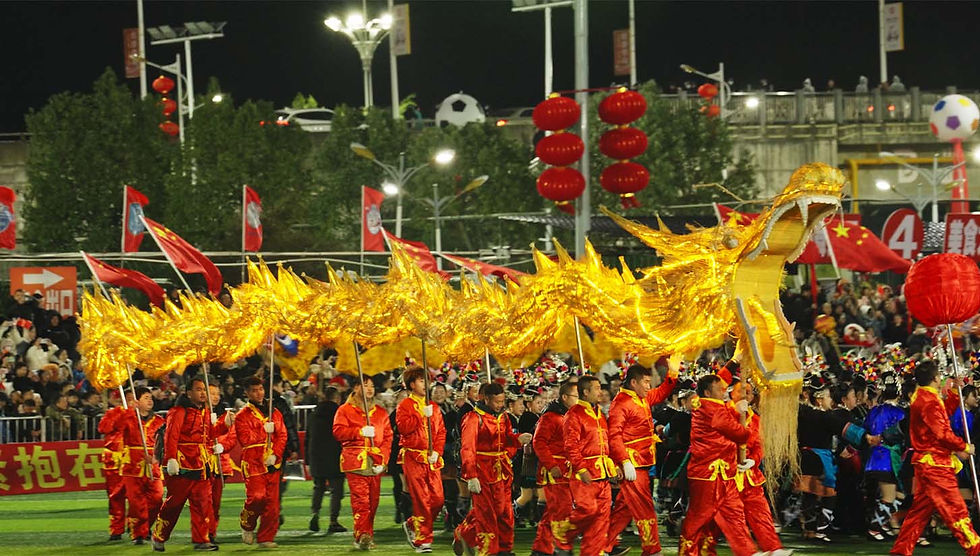
Cun Chao is not just a sports tournament. It is a social institution, an economic platform, and a cultural movement. It unites farmers and live streamers, elders and students, entrepreneurs and officials. It turns spectators into producers and fans into stakeholders. At the same time, it faces numerous challenges: commercialization pressure, unequal access, and sustainability risks. Its future will depend on whether Rong Jiang can preserve its “people’s football” spirit while managing growth.
If it continues into long-term success, Cun Chao will not only change Chinese football. It will remain one of the most important grassroots development experiments in contemporary China.


Comments